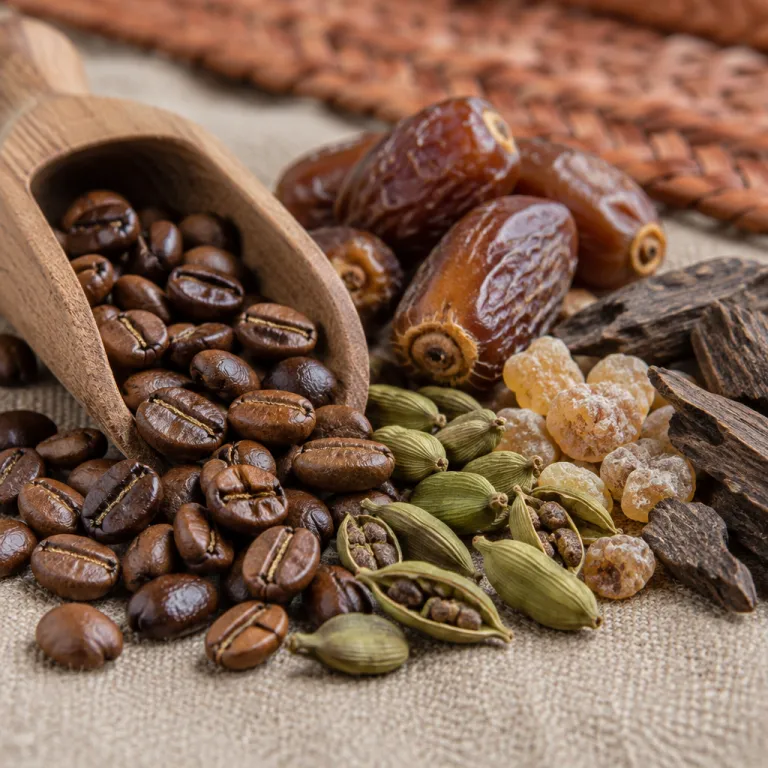
The first ten minutes: reading Bahrain through the coffee tray
The measure of bahrain hotel arabic coffee hospitality is set before check in finishes. When the tray of Arabic coffee and dates appears in the lobby, you are not just being refreshed, you are being quietly briefed on how this property understands traditional Bahraini welcome and how its gastronomy will unfold later. Watch how the pot is carried, how the cups are served, and how much time the host gives you in that first space ; these details reveal whether you are in a genuinely Bahraini hotel or a generic Gulf resort.
In a strong arrival, the server explains the Arabic gahwa blend, mentions cardamom or saffron, and offers dates from a specific farm rather than anonymous sweets. That small narrative links you to the island’s trading past, when coffee beans and spices moved through Manama’s harbour, and it signals that the hotel’s wider service culture respects provenance and story. When bahrain hotel arabic coffee hospitality is treated this way, the ritual becomes a prologue to the hotel’s seafood restaurants, its lobby café, and even its late night room dining.
By contrast, when a lukewarm pot of coffee is dropped on a side table without eye contact, you are being told something else about priorities. The gesture still technically offers refreshment, yet the absence of context, of local detail, and of genuine engagement suggests a template imported from another international market. Guests who care about bahrain hotel arabic coffee hospitality learn to read this moment as a quick audit of the hotel’s gastronomic ambition and its relationship with the surrounding community.
From lobby tray to island story: what authentic Bahraini welcome looks like
Hotels that treat gahwa as a cultural code rather than a prop tend to anchor every part of their gastronomy in Bahrain’s trading history. You might see a low open majlis near reception, where Arabic coffee is poured slowly while a host explains how pearl divers once relied on similar rituals to seal trust before voyages. In these properties, bahrain hotel arabic coffee hospitality is inseparable from the island’s markets, its seafood restaurants, and its family kitchens.
Look for local halwa beside the dates, or for a server who can point you towards a neighbourhood café where the same style of coffee is served to the wider community. When a concierge recommends a street stall in Muharraq or a stallholder in Manama souq, they are extending the hotel’s welcome beyond its walls and inviting you to eat like a local around the souq and street food trail. That is bahrain hotel arabic coffee hospitality at its most generous, where the first sip becomes a map for how to explore the island’s flavours.
In these hotels, the same care appears later when you explore their seafood restaurants or lobby café menus, where Bahraini dishes sit confidently beside international classics. The arrival tray’s spices echo in grilled hammour marinades, in date syrups, and in desserts that give credit to traditional recipes rather than hiding them behind generic luxury plating. Guests who value bahrain hotel arabic coffee hospitality quickly realise that a thoughtful first pour usually predicts a kitchen that respects both heritage and modern expectations.
When the ritual is theatre: spotting the Gulf template
Not every polished lobby in Manama signals rooted bahrain hotel arabic coffee hospitality, even when the tray looks perfect. Some properties import a standardised version of Arabic coffee service, complete with ornate dallah pots and uniformed staff, yet the ritual feels strangely detached from the island outside. You sense that the same script could be playing in any international airport hotel or resort across the Gulf.
One tell is how quickly the tray disappears once the performance is over, leaving no lingering invitation to sit, talk, or explore the hotel’s culinary philosophy. Another is the absence of local references ; no mention of Bahraini dates, no nod to the old pearling community, no suggestion that you might later visit the souq or a family run café. In these spaces, bahrain hotel arabic coffee hospitality is reduced to a photo opportunity, while the menus lean heavily on anonymous buffets and generic seafood restaurants that could be anywhere.
Contrast that with properties where the same ritual quietly points you towards late night venues that are worth your time, such as the hotel dining rooms highlighted in this guide to night dining in Manama’s hotel restaurants. There, the first cup of coffee is an invitation to stay curious, to ask about off menu dishes, and to treat the hotel’s space as a living extension of Bahrain rather than a sealed luxury bubble. Guests who care about bahrain hotel arabic coffee hospitality quickly learn to favour these properties over those that only stage the ritual for show.
Ritz Carlton and peers: when global brands speak fluent Bahrain
Global names can either flatten or amplify bahrain hotel arabic coffee hospitality, and the difference lies in how they handle the first pour. At the Ritz Carlton Bahrain, for example, the welcome often combines the brand’s polished service standards with a distinctly island inflection in its gahwa ritual. The Ritz team tends to emphasise traditional flavours, local ingredients, and a sense of place that reaches from the lobby to the beach club and its seafood restaurants.
When a Ritz Carlton host offers Arabic coffee on arrival, the gesture usually comes with context about the property’s community partnerships and its Bahraini suppliers. That narrative matters for business leisure travellers who want their luxury stay to carry cultural credit, not just status. In these settings, bahrain hotel arabic coffee hospitality becomes a bridge between international expectations and island specific character, rather than a compromise between the two.
Other high end brands in Bahrain follow similar paths, using the gahwa ritual to introduce guests to on site café concepts, open air majlis spaces, and resort style beach venues where coffee is served alongside mezze and grilled fish. When you explore these properties through mybahrainstay.com, especially when planning around events using the Bahrain festival and hotel stay calendar guide, you can quickly see which hotels treat the ritual as a living language. Those are the addresses where bahrain hotel arabic coffee hospitality signals a deeper commitment to thoughtful dining, attentive service, and meaningful engagement with the island’s stories.
How to ask for the real thing – and what it predicts for your stay
As a business leisure traveller, you can actively shape your experience of bahrain hotel arabic coffee hospitality from the moment you arrive. When the tray appears, ask where the beans come from, how the spice mix is chosen, and whether the recipe reflects a particular Bahraini family or region. Those questions are not tests, they are invitations for the team to share pride in their craft and to show how deeply the hotel is rooted in its community.
If the host responds with enthusiasm, perhaps suggesting you later visit a partner café in Manama or try a specific dish in one of the hotel’s seafood restaurants, you can safely assume the property takes its gastronomy seriously. That same curiosity will usually be rewarded when you explore the breakfast buffet, where traditional Bahraini dishes sit beside international options, or when you order Arabic coffee again in a quieter space overlooking the beach. In these hotels, the first cup becomes a through line connecting every coffee break, every meeting, and every late night snack.
Pay attention too to how flexibly the hotel handles time and context around the ritual, whether it is served only at check in or also offered before key meetings or departures. Properties that are willing to open their kitchens a little early, to adapt the gahwa service to your schedule, or to extend it to visiting colleagues are signalling a guest centric approach to luxury. In Bahrain, that is the real credit of bahrain hotel arabic coffee hospitality ; it shows you are not just passing through a resort, you are being folded, however briefly, into the island’s ongoing conversation over coffee.
FAQ
How can I tell if a hotel’s Arabic coffee service is authentic?
Authentic bahrain hotel arabic coffee hospitality usually includes a clear explanation of the blend, visible pride from the server, and some reference to Bahraini culture or local sourcing. If the Arabic coffee is served with dates or halwa from named producers and the team encourages you to explore nearby markets or café spots, you are likely experiencing a rooted ritual. When the tray appears without context or engagement, it often signals a more generic template.
Does a strong coffee ritual really predict better food and beverage?
In many Bahrain properties, the care shown in the gahwa ritual mirrors the attention paid to restaurants and bars. Hotels that invest in thoughtful bahrain hotel arabic coffee hospitality tend to highlight traditional dishes, partner with the community, and run seafood restaurants that respect provenance. While there are exceptions, a considered first pour is often a reliable indicator of broader gastronomic ambition.
Should I tip during the Arabic coffee welcome service?
Tipping practices vary, but in most luxury hotels in Bahrain the arrival gahwa is part of the standard service and does not require an immediate tip. Many guests choose to leave credit in the form of a gratuity at the end of their stay if the overall bahrain hotel arabic coffee hospitality and dining experience has been memorable. If you do tip at the moment, a modest amount is sufficient and always appreciated.
Can I request Arabic coffee outside the usual arrival moment?
Yes, most high end properties are happy to open their gahwa ritual beyond check in, especially for business meetings or private gatherings. You can ask for Arabic coffee to be served in a lounge, on a terrace, or even in a beach cabana, depending on the hotel’s space. This flexibility is another sign of strong bahrain hotel arabic coffee hospitality and a guest focused approach.
Are international hotel brands in Bahrain good choices for local coffee rituals?
Many international brands, including the Ritz Carlton, have learned to integrate Bahraini traditions into their arrival experiences. When these hotels highlight local suppliers, train staff to share cultural context, and connect the ritual to their seafood restaurants or café concepts, they can offer very strong bahrain hotel arabic coffee hospitality. The key is to look for properties that treat the ritual as a genuine cultural bridge rather than a decorative performance.
Suggested sources for further reading on Bahraini hospitality and gastronomy include the Bahrain Tourism and Exhibitions Authority, Gulf Air’s in flight magazine, and regional hospitality reports from Ernst & Young.