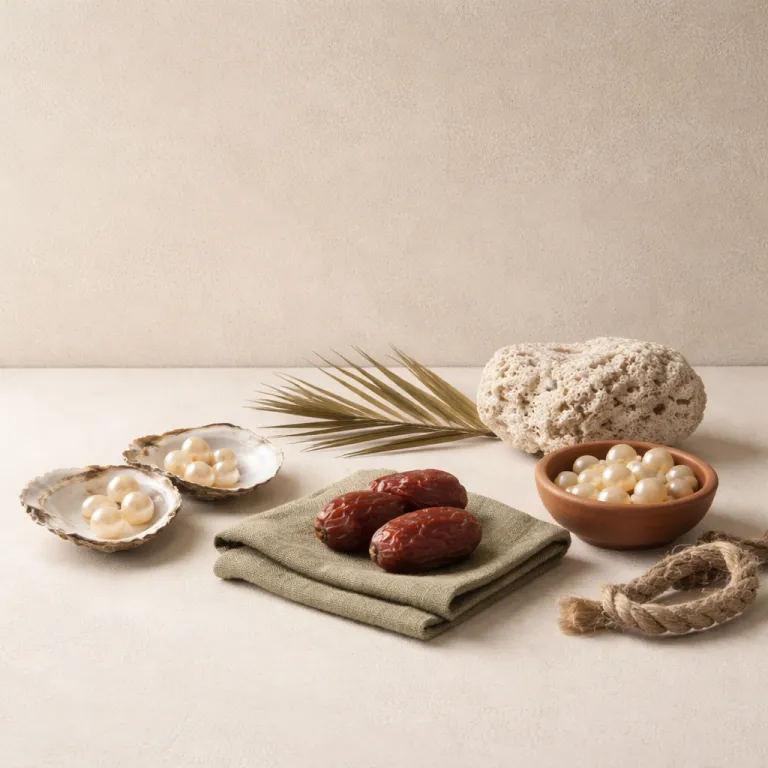
Bahrain luxury vs dubai through a pearling lens, not a mall
Bahrain and Dubai sit only about 568 kilometers apart by air, yet they operate on different luxury logics. Bahrain leans into an older trading soul, where the Pearling Path in Muharraq and the Manama souq shape how hotels think about service and scale, while Dubai builds upward around Downtown Dubai, Dubai Marina and the shadow of Burj Khalifa. When you weigh Bahrain luxury vs Dubai as a solo traveler, the question is not which skyline is higher but which rhythm fits your days.
Walk the Pearling Path and you feel how heritage still frames hospitality in Bahrain. UNESCO documentation notes that the trail runs for roughly three kilometers and links 17 restored buildings, a compact ensemble that quietly influences how concierges talk about the island. The lineage of pearl divers and merchants means a Ritz-Carlton afternoon tea here often comes with stories about the bay and the old dhows, not just a perfect pastry picture for social media. That depth is why Bahrain’s luxury feels less like a stage set and more like a lived-in apartment above a real estate office, where the call to prayer drifts in from the next alley.
Dubai, by contrast, excels at spectacle and scale, and it does this with unapologetic clarity. From Palm Jumeirah to beachfront Dubai resorts, the city is engineered for impact, with high-floor suites that frame the real estate market of towers in every direction. When travelers compare Bahrain–Dubai options, they are often choosing between a curated island bay and a vertical circle Dubai of glass, steel and choreographed light.
Cost matters, even at the premium end, and the cost-of-living gap between the two cities shapes how far your budget stretches. Comparative economic datasets such as World Bank and Numbeo consistently show that Dubai generally has a higher cost of living than Bahrain, and that difference filters down into room rates, spa menus and even the BHD–AED mental conversion you do at check-in. For the same nightly spend in AED, mid-luxury in Bahrain can feel higher in service quality than some top-tier addresses in estate Dubai, especially once you factor in quieter pools, shorter elevator waits and staff who remember your coffee order after two days.
Travelers often ask whether Bahrain is part of Dubai, and the answer is simple and clarifying. “Is Bahrain part of Dubai? No, Bahrain is a separate island country in the Persian Gulf.” That separation is not just political; it is experiential, and it explains why Bahrain luxury vs Dubai is a real choice rather than a question of interchangeable Gulf cities.
On booking platforms that track Gulf itineraries over weeks rather than hours, you see this play out in how guests weigh a high-floor suite facing Manama’s bay against a similar category in Downtown Dubai. A few days ago a solo guest described shifting from Dubai to Bahrain after realizing that the same budget bought a sea-view room plus a privately arranged guided walk along the Pearling Path. That kind of decision, repeated day after day, is slowly reshaping the regional luxury travel market.
From souq alleys to sky lobbies: how hotel scale changes the stay
Scale is where Bahrain luxury vs Dubai becomes tangible the moment you arrive. In Manama, even the largest properties feel human-sized, with lobbies that open toward the bay or the city’s low-rise estate market rather than into a mall atrium. You can step from a Ritz-Carlton lounge into the evening air in minutes, then be at a halwa shop in the souq before your espresso buzz fades.
Dubai’s luxury hotels are often embedded in mixed-use real estate, where your suite sits above a listed property portfolio of offices, branded residences and retail. That vertical integration has its advantages, especially if you want to move from a high-floor apartment-style suite to a three-Michelin-star dinner without crossing a street, but it also means you share elevators with conference badges and shopping bags. When you stay in Downtown Dubai or circle Dubai districts like Jumeirah Village Circle, you are buying into a complete urban machine rather than a single hotel narrative.
For solo travelers, the difference shows up in how you use your days. In Bahrain you might start with a bay-view breakfast, then walk or take a short ride to the Manama souq, where the real estate of daily life still looks like stacked apartments above spice shops and gold traders. In Dubai, a similar morning could involve a long glide down from a high floor in Dubai Marina, a climate-controlled stroll through a mall, and then a taxi out to beach Dubai for actual sea and sand.
Price-to-experience ratios tilt subtly in Bahrain’s favor once you factor in this scale. Because the overall estate market is smaller, premium hotels compete on service nuance rather than just on ever-higher towers or more extravagant pool decks. For the same AED amount you might spend on a standard room in Palm Jumeirah, you can often secure a sea-facing room with club access in Bahrain, where the staff-to-guest ratio feels higher and the atmosphere calmer.
When you are choosing a property on a platform like mybahrainstay.com, this is where detailed amenity breakdowns matter. Our guide to premium hotel features that elevate your Bahrain stay focuses on specifics such as pool orientation, spa access policies and late-checkout flexibility, because these details shape how you actually live in the space. In a market where new hotels are being listed every few weeks, those granular differences help you read beyond the marketing picture and understand the real value behind each nightly rate.
Dubai will always win if your definition of luxury is the highest possible tower with the brightest possible view. Bahrain, by contrast, rewards travelers who value short transitions, walkable distances and the ability to step from a polished lobby into a real neighborhood in under ten minutes. That is why Bahrain–Dubai comparisons should start with your preferred daily rhythm, not with the number of stars on the façade.
Money, markets and the quiet power of Bahrain’s hotel economics
Behind every Bahrain luxury vs Dubai choice sits a simple question: what does your money actually buy you? The BHD–AED exchange rate is only the first layer, because the deeper story lies in how each city’s estate market allocates land, height and hospitality. Bahrain’s smaller footprint forces hotels to think carefully about every square meter, while estate Dubai can still push outward and upward with new districts.
Dubai’s real estate has become an asset class in its own right, with average rental yields around five percent according to regional property reports such as WealthWalls (2023), drawing investors into apartments in Dubai Marina, Downtown Dubai and Jumeirah Village. That investor-driven logic shapes hotel design, as mixed-use towers blur the line between serviced apartment, long-term rental and transient guest room. When you book a high-floor suite in a property overlooking Burj Khalifa, you are often sharing the building with owners who bought for capital appreciation rather than for the nightly experience.
Bahrain’s hotel scene, by contrast, still feels anchored in hospitality first and real estate second. The estate market is growing, and luxury brands from Chanel to regional groups are paying attention, but the island’s scale keeps projects more contained and more integrated into existing neighborhoods. You see it in the way a waterfront property on Amwaj Island frames its bay view not just as a picture but as a daily ritual, with morning paddleboarders and evening dhows both part of the horizon.
For travelers, this translates into a different kind of value proposition. Because Dubai generally has a higher cost of living than Bahrain, as shown in comparative cost-of-living indices from the World Bank and Numbeo (accessed 2023–2024), the same AED budget can secure more generous room sizes, better included breakfasts and often more flexible late-checkout policies on the island. When you run the numbers over several days, especially for solo travel, Bahrain’s quieter luxury can deliver a higher experiential return on investment than a more expensive but more generic stay in Dubai.
On mybahrainstay.com we see guests comparing Dubai–Bahrain itineraries not just by nightly rate but by how many meaningful experiences fit between check-in and check-out. A few days ago a traveler shifted two nights from Dubai to Bahrain after realizing that the saved budget covered a private guide along the Pearling Path and a spa treatment. That kind of reallocation is where the real Bahrain luxury vs Dubai story lives, in the trade-off between square meters of marble and hours of lived culture.
If you are planning a wider Gulf circuit, the economics become even more interesting. Our guide to hotels in Oman for refined travelers planning a premium stay from Bahrain shows how pairing Bahrain with Muscat can create a three-stop itinerary that balances cost of living, culture and coastline. In that triangle of Dubai, Bahrain and Oman, Bahrain often emerges as the place where your budget breathes a little, without any drop in linen thread count.
Who Bahrain is really for, when Dubai still calls
The most honest way to frame Bahrain luxury vs Dubai is to admit that they serve different travel instincts. Dubai is unmatched if you want a tightly choreographed long weekend of sky bars, beach Dubai clubs and Jumeirah brunches, all stacked within a few taxi rides. Bahrain, by contrast, rewards the traveler who wants to walk, linger and let the day stretch without a fixed script.
If your ideal evening involves a high-floor cocktail with a laser-show view over Burj Khalifa, followed by a late-night call to a driver and a glide back to your apartment-style suite, Dubai will feel like home. The city’s infrastructure is built for that rhythm, from the metro lines threading through Downtown Dubai to the ring of hotels around Dubai Marina and Palm Jumeirah. In that context, luxury is about access, speed and the ability to compress as many experiences as possible into a few days.
Bahrain’s luxury logic is slower and more horizontal. You might start in Manama with a morning walk through the souq, then drift out to Al Areen Wildlife Park in the afternoon, before ending the day at a waterfront property where the bay breeze does most of the design work. The island’s relatively liberal social fabric compared with some neighbors means you can move easily between heritage sites, contemporary galleries and low-key lounges without feeling that you have stepped out of bounds.
For solo explorers, that ease matters as much as any marble lobby. You can base yourself on Amwaj Island, using a refined stay in what locals sometimes call the floating city as your launchpad for the rest of the archipelago. Our in-depth guide to refined stays on Amwaj Island breaks down which properties offer the best balance of bay-view serenity, quick airport access and authentic neighborhood feel.
The risk for Bahrain is that a wave of new openings, even if only 16 hotels, could nudge the island toward a lighter version of estate Dubai, with more towers and fewer alleys. As more properties are listed and the estate market heats up, travelers will need sharper tools to separate genuinely place-rooted hotels from generic glass boxes. That is where curated platforms like mybahrainstay.com come in, filtering the noise so that your next booking reflects the Bahrain you came for, not a copy of somewhere else.
In the end, the choice between Bahrain and Dubai is less about better or worse and more about which story you want your days to tell. If you crave the feeling of stepping out of a lobby and straight into a living city, Bahrain will probably feel like the higher form of luxury, even if the skyline is lower. If you still want the full vertical fantasy, Dubai will keep calling, and the Gulf is generous enough to let you answer both.
Key figures shaping Bahrain and Dubai for luxury travelers
- The distance between Bahrain and Dubai is about 568 kilometers by air, which makes it easy to combine both cities in a single Gulf itinerary by short flight or multi-stop trip, according to route data summarized by LuxuryTravelDiva (accessed 2023).
- Bahrain’s population is around 1.7 million residents, a scale that keeps the hotel footprint relatively compact and supports a more intimate luxury scene than Dubai’s, based on population figures cited by LuxuryTravelDiva from World Bank datasets (2022–2023).
- Average rental yields in Dubai’s real estate market are around five percent, as reported by WealthWalls and similar regional property analyses (2023), which helps explain the strong investor presence in districts like Dubai Marina and Downtown Dubai and the prevalence of mixed-use hotel towers.
- Dubai generally has a higher cost of living than Bahrain, according to comparative economic reports from sources such as the World Bank and Numbeo (2023–2024), so the same budget in AED can often secure larger rooms and more inclusive services in Bahrain’s premium hotels.
- The Pearling Path in Muharraq runs for about three kilometers and links 17 restored heritage buildings, a UNESCO-listed ensemble documented by the World Heritage Centre (inscription updated 2012–2019) that directly influences how nearby hotels frame cultural experiences for guests.
References
- UNESCO World Heritage Centre – Pearling, Testimony of an Island Economy (Bahrain), including trail length and building count (inscription and documentation consulted 2019–2023).
- World Bank and Numbeo – comparative cost-of-living and economic indicators for Bahrain and Dubai, including population estimates (datasets accessed 2022–2024).
- WealthWalls and regional property reports – data on Dubai real estate yields and investment trends in districts such as Dubai Marina and Downtown Dubai (reports published 2023).
- LuxuryTravelDiva – route summaries and regional overviews used for indicative distance and itinerary planning between Bahrain and Dubai (content reviewed 2023).